

At a Glance: Saltwater pools generate chlorine automatically through a salt chlorine generator. Routine maintenance is necessary to protect your equipment, pool surfaces, and water quality. Caring for a saltwater pool involves regular water chemistry testing and salt cell inspections.
Saltwater pools have become a popular alternative to traditional chlorine pools, offering a gentler swimming experience and simplified chemical management. However, these pools still require regular maintenance, the approach is just a bit different than traditional chlorine pools.
Many people assume that saltwater pools are chlorine-free. Instead, they generate chlorine from salt through a salt chlorine generator. Understanding how to properly care for a saltwater pool helps protect your salt system, pool surfaces, and water quality so you can enjoy your pool all season long.
How Saltwater Pools Work
While both saltwater and traditional pools use chlorine as a primary sanitizer, saltwater pools generate chlorine at lower, steadier levels and do not require periodic additions of the chemical.
The Salt Chlorine Generator
Saltwater pools use a salt chlorine generator, also called a salt cell or salt system, to produce chlorine. Salt is added to the pool water at a concentration of approximately 2,700 to 3,400 parts per million (ppm). The salt cell uses a process called electrolysis to convert dissolved salt (sodium chloride) into chlorine. The chlorine sanitizes the water, then reverts back to salt, creating a continuous cycle. This process is automatic, which reduces the need for manual chlorine addition and makes salt water pool maintenance more convenient for many homeowners.
Key Components
A saltwater system consists of several key components that work together:
- Salt Cell: The chlorine generator cell where electrolysis occurs.
- Control Board: Manages chlorine output and displays system status so you can monitor performance.
- Flow Sensor: Ensures water is flowing before the cell activates, protecting the system from running dry.
- Salt Level Sensor: Monitors salt concentration in the water and alerts you when levels need adjustment.
Routine Saltwater Pool Maintenance
Weekly Tasks
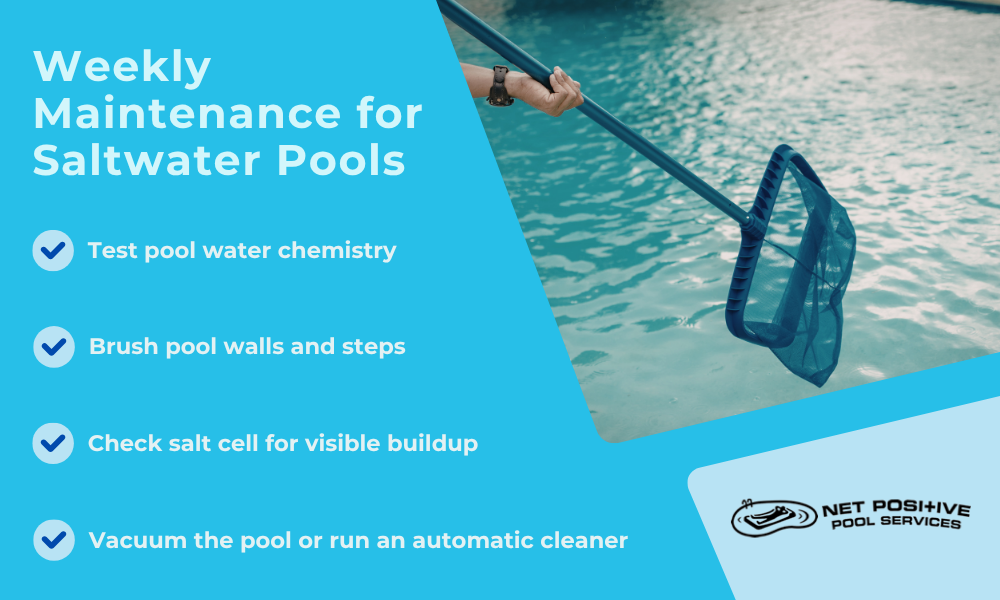
Weekly maintenance keeps your saltwater pool in good condition and prevents small issues from becoming larger problems:
- Test your pool water chemistry including pH, free chlorine, and salt level
- Skim the surface to remove debris and empty skimmer baskets
- Brush pool walls, steps, and the water line to prevent algae and scale buildup
- Vacuum the pool or run your automatic pool cleaner as needed
- Look at your salt cell for any visible buildup or debris
- Check that the pool pump and filter are operating properly
Monthly Tasks
Monthly tasks address water chemistry factors that change more slowly:
- Test total alkalinity, calcium hardness, and cyanuric acid (stabilizer) levels to make sure everything is in balance
- Inspect your salt cell more thoroughly for calcium scale deposits that can reduce efficiency
- Clean out skimmer and pump baskets, check the water level and top off as needed
- Review the salt system control panel for any error codes or alerts that may need attention
Seasonal Tasks
Proper maintenance prepares your pool for heavy use or off-season storage:
- Deep clean or replace your pool filter media as needed
- Inspect the salt cell and clean it if scale is present
- Check all pool equipment including the pump, heater, and automation controls before peak swimming season
- Balance your water chemistry thoroughly at season start
- Winterize your salt system if you close your pool for the off-season in colder climates
Balancing Water Chemistry in a Saltwater Pool
Salt Level
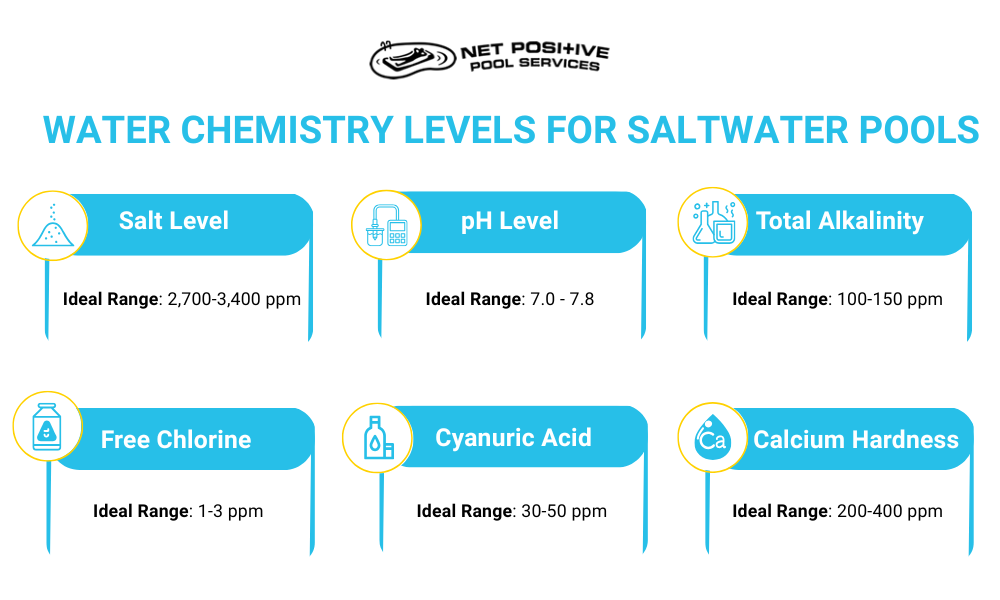
The ideal pool salt level range is 2,700 to 3,400 ppm, though this varies by manufacturer so check your system’s specifications. If salt levels are too low, the salt cell cannot generate enough chlorine and the system may shut off. If salt is too high, it can cause corrosion and damage to pool equipment and surfaces. Always use pool-grade salt (sodium chloride) without additives.
pH Level
Maintaining proper saltwater pool pH is one of the most important aspects of salt water pool maintenance. The ideal range is 7.0 to 7.8. Salt systems tend to cause pH to drift upward over time, which is normal but requires regular attention. Keeping pH in the proper range protects your pool surfaces and equipment. Check pH weekly and adjust with muriatic acid or pH decreaser as needed.
Free Chlorine
The ideal free chlorine range is 1 to 3 ppm. Your salt cell output can be adjusted on the control panel to increase or decrease chlorine production based on your pool’s needs. Test chemical levels weekly to ensure adequate sanitation. After heavy pool use, storms, or if you notice any algae issues, boost chlorine levels by shocking the pool.
Total Alkalinity
Total alkalinity should be maintained in the range of 100 to 150 ppm. Alkalinity helps stabilize pH and prevents rapid fluctuations that can be difficult to manage. Adjust with alkalinity increaser (sodium bicarbonate) if levels are low, or use acid to bring levels down if they are too high.
Cyanuric Acid (Stabilizer)
The ideal cyanuric acid range for saltwater pools is 30 to 50 ppm. Stabilizer protects chlorine from UV degradation caused by sunlight. If levels are too high, chlorine effectiveness is reduced. If levels are too low, chlorine dissipates quickly. Add stabilizer at season start or after any significant water replacement.
Calcium Hardness
Calcium hardness should be maintained between 200 and 400 ppm. Low calcium can cause corrosive water that damages pool surfaces and equipment over time. High calcium contributes to scale buildup on the salt cell and pool surfaces. If calcium levels are low, adjust with calcium chloride.

Salt Cell Maintenance
Why Salt Cell Care Matters
The salt cell is the heart of your salt system, and proper salt cell maintenance is key to keeping your saltwater pool running smoothly. Scale buildup on the cell plates reduces efficiency and shortens the lifespan of the cell. With proper care, a well-maintained salt cell can last up to 7 years.
Inspecting the Salt Cell
Inspect your salt cell at least every 3 months. Look for white, chalky calcium scale deposits on the plates inside the cell. Check for any debris or blockages that could restrict water flow. Some salt systems have self-cleaning features that reverse polarity to reduce buildup, but regular visual inspection is still recommended.
Cleaning the Salt Cell
If scale is present on the cell plates, cleaning restores efficiency. Use a salt cell cleaning solution or a diluted muriatic acid mixture. Soak the cell for 2-5 minutes until the scale dissolves, then rinse thoroughly with fresh water before reinstalling. Avoid scraping or brushing the plates, as this can damage the protective coating. Do not over-clean your cell; excessive acid exposure can shorten its lifespan.
When to Replace the Salt Cell
Signs that your salt cell needs replacement include reduced chlorine output despite proper salt levels and clean plates, frequent low salt or check cell alerts on the control panel, visible damage, corrosion, or worn plates, and a cell that no longer responds to cleaning. Most salt cells last 3 to 7 years depending on pool size, usage, and how well they are maintained.
Common Saltwater Pool Issues and Solutions
Low Chlorine Levels
Start by checking your salt level and adding salt if it falls below the recommended range. Inspect and clean the salt cell for scale buildup, and increase the chlorine output setting on your control panel if needed. Confirm that water is flowing adequately through the cell, and shock the pool if algae or contamination is present.
High pH
This issue is typical in saltwater pools due to the electrolysis process. Test pH weekly and adjust with muriatic acid or pH decreaser. Aeration from water features or spillovers can also raise pH. Consistent monitoring prevents scale buildup and cloudy water.
Calcium Scale Buildup
Calcium buildup is caused by water hardness, high pH, or high alkalinity. It forms on salt cell plates, pool surfaces, and equipment. Maintain balanced pool water chemistry to prevent scale, clean your salt cell regularly, and consider using a scale inhibitor product if scaling is persistent.
Corrosion
Corrosion can occur when salt levels are too high or water chemistry is unbalanced. It affects metal pool components like ladders, rails, and equipment. Keep salt within the recommended range, maintain proper pH and alkalinity, and rinse metal fixtures regularly. Test and balance water chemistry, clean or backwash your filter, run the pump longer to improve circulation, and shock the pool if necessary.
Tips for Long-Term Saltwater Pool Care
Protect Your Investment
Follow the manufacturer guidelines for your specific salt system to avoid voiding warranties or causing damage. Keep water chemistry balanced to extend the life of your equipment and pool surfaces. Address issues promptly before they become costly repairs. Tracking your water chemistry test results over time helps you identify patterns and catch problems early.
Work with a Pool Professional
Wear and tear can lead to bigger problems in the future if they are not addressed properly. Trusting a pool professional with equipment repairs, system inspections, and regular maintenance can help you maintain your pool long-term. If you notice unusual system behavior, such as unbalanced chemical levels and error codes on your control panel, reach out to a pool technician.
Maintain Your Saltwater Pool with Net Positive Pool Services
Saltwater pools require regular maintenance, including water chemistry testing, salt cell inspection and cleaning, and routine pool care tasks. Proper care protects your salt system, pool surfaces, and water quality while maximizing the benefits of saltwater swimming.
Working with professional pool technicians can help you keep your pool in great shape year-round. Stay consistent with weekly maintenance, salt cell cleaning, and equipment repairs from Net Positive Pool Services to keep your saltwater pool clean, clear, and ready for swimming all season long.


