
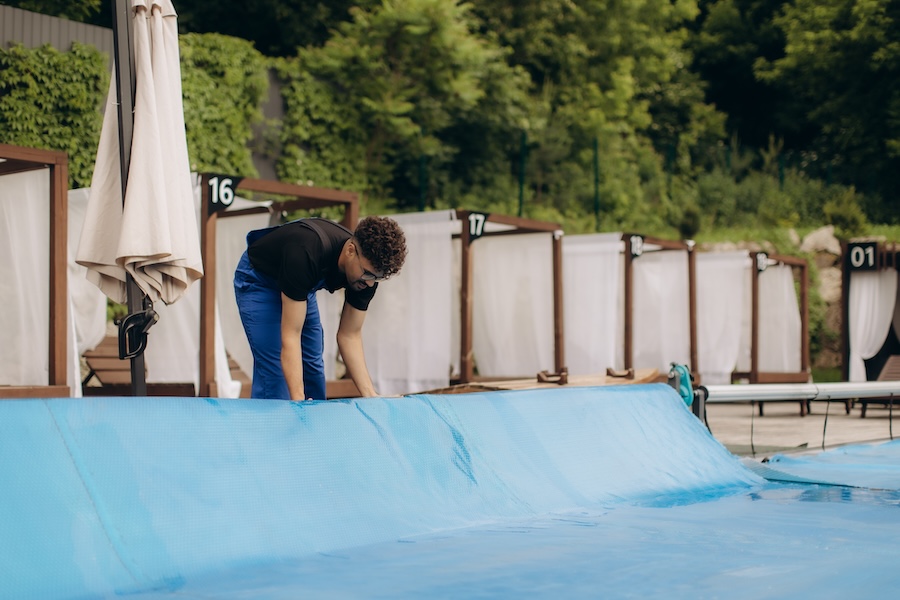
When temperatures start dropping, the last thing any pool or hot tub owner wants to think about is the work involved in winterization. But here’s the reality: taking the time to properly close your pool and hot tub now will save you from headaches, costly repairs, and a green, murky mess come spring.
The short answer? Closing down a pool or hot tub involves balancing your water chemistry, lowering the water level, protecting your equipment from freeze damage, and securing everything with a quality winter cover.

Balance Your Water Chemistry First
About a week before you plan to close everything down, start with your water chemistry. This isn’t just busy work. Properly balanced water prevents scale buildup on your pool surfaces and keeps algae from taking over during the winter months.
For pools, test and adjust these levels:
- pH: Keep it between 7.2 and 7.6
- Alkalinity: Aim for 80-120 ppm
- Calcium hardness: Target 175-225 ppm for concrete pools, 175-225 ppm for vinyl
- Chlorine level: Shock your pool water to 10 ppm before closing
Hot tub owners need to follow similar guidelines, though the ranges differ slightly. Your calcium hardness should sit between 150-250 ppm, and alkalinity works best at 80-120 ppm.
A few days before closing, add chlorine shock to your swimming pool. This sanitizes the water thoroughly and gives you a clean slate. For hot tubs, drain and refill with fresh water if it’s been more than three months since your last change.
Don’t forget the physical cleaning. Use a pool brush to scrub down the walls and floor of your inground pool or fiberglass pool. Vacuum up any debris. The cleaner your water is now, the easier spring startup will be. Ground pool owners should pay extra attention to corners and steps where dirt likes to hide.
Lower Water Levels and Drain Your Equipment
The water level in your pool needs to come down, but not all the way. For most pools, lower it to just below the skimmer. This prevents water from freezing in the skimmer and cracking it. Some fiberglass pool manufacturers recommend different levels, so check your owner’s manual.
Use a submersible pump if you need to remove a lot of water quickly. Your standard filter pump works too, but it takes longer.
Protect Your Pool Equipment From Freezing
Any excess water left in pipes, pumps, or filters can freeze and expand, causing cracks that cost hundreds or even thousands to repair.
Start with these steps:
- Turn off all power to your pool pump and filter pump
- Remove the drain plug from your pump, filter, and heater
- Open the air relief valve on your filter
- Let everything drain completely
For pools, you’ll want to blow out the lines using an air compressor. This pushes any remaining water out of the pipes. Start at the skimmer, then move to the main drain, and finish with the return lines. Once air is flowing freely, plug the lines with expansion plugs or winterizing plugs.
Hot tub winterization follows a similar process. After draining the tub completely, remove the drain plug from your hot tub’s pump and heater. Use a wet/dry vacuum to suck out any water trapped in the jets and plumbing lines. Water temperature doesn’t matter at this point since everything should be empty.
Don’t Forget Pool Antifreeze
After clearing all of your pipes, pumps, and heaters, add pool antifreeze to your skimmer and main drain lines. This isn’t the same as car antifreeze; pool antifreeze is non-toxic and specifically designed for swimming pools and hot tubs. Pour it into the skimmer until you see it coming out of the return jets.
Clean out your skimmer basket before closing the skimmer valve. Any debris left behind can freeze and cause damage.

Clean and Store Your Filters and Accessories
Your filter works hard all season. Give it a proper cleaning before storage. The process varies depending on what type you have.
Cartridge Filter Maintenance
Remove the cartridges and spray them down with a hose. For a deep clean, soak them overnight in a filter cleaner solution. Let them dry completely before storing indoors. Remove the drain plug from the filter housing and tip it to drain all water.
Store Pool Accessories Properly
Bring everything indoors: pool chemicals, testing kits, cleaning tools, floats, and toys. Pool chemicals can degrade in freezing temperatures. Store them in a dry place where temperatures stay above freezing.
Remove any pool accessories like ladders, diving boards, or slides if possible. If you can’t remove them, make sure they’re secured and won’t shift under snow and ice.
Hot tub owners should remove and store the cover lifter if they have one. Bring in any spa steps or accessories.
Install Your Winter Cover
The pool cover or winter cover is your last line of defense against debris, snow melt, and the elements. But not all covers are created equal.
For in-ground pools, a solid safety cover offers the best protection. These prevent anything from falling into the pool and can support weight (important if you have kids or pets). Mesh covers work too and let water drain through, but they allow more sunlight in, which can lead to some algae growth.
Hot Tub Covers
Hot tubs get a different treatment. If you’re keeping your hot tub running through winter (which many people do), invest in a good insulated cover and make sure the seal is tight. This keeps your energy bills reasonable.
If you’re shutting down your hot tub completely, use a winter cover designed for spas. These are typically more durable than regular covers and handle snow load better.
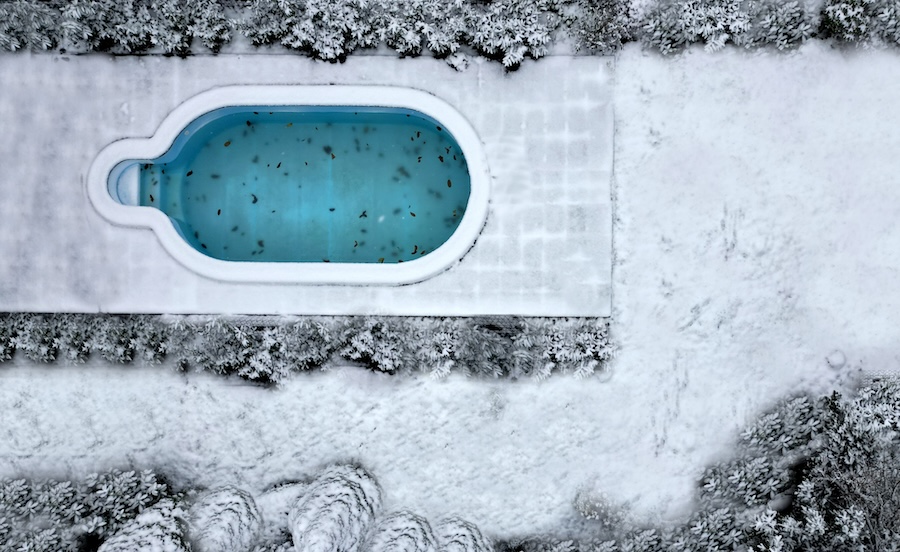
When Professional Help Makes Sense
Net Positive Pools has been winterizing pools and hot tubs across the Carolinas and Georgia since 2018. Our teams in Huntersville, Mooresville, Concord, Raleigh, and more know the specific challenges of winterizing in our region. We understand how temperature swings affect in-ground pools differently than above ground pool setups, and we know fiberglass pool manufacturers’ recommendations inside and out.
We handle everything from balancing water chemistry to blowing out lines with professional-grade equipment. Our technicians know the difference between a cartridge filter and a sand filter, and they’ll make sure your skimmer basket is cleaned and your main drain is properly winterized.
Plus, when spring rolls around, we offer startup services to get you back in the water faster. No guessing about whether you closed everything correctly or spending hours debugging problems.
Ready for Winter?
Winterizing your pool and hot tub the right way protects your investment and makes spring opening so much easier. Whether you tackle it yourself or bring in professionals, following the proper steps now means less stress and fewer repair bills later.
Want to skip the work and worry? Contact Net Positive Pools for expert winterization service. We’ll handle the details so you can focus on planning your first pool party of next season.


