
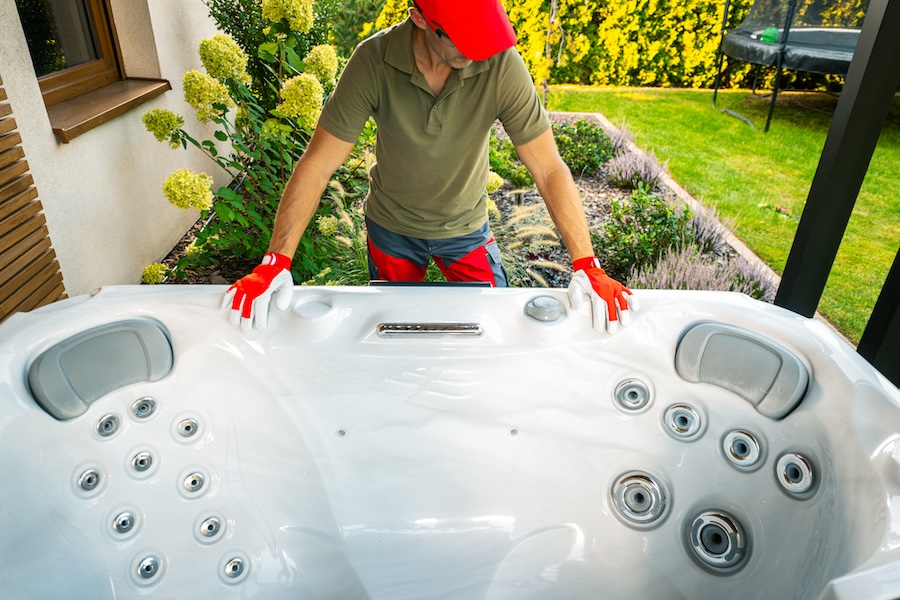
Here’s the quick version: Setting up a new hot tub involves choosing a stable location, having a qualified electrician handle the power connection, filling it with water using a hose filter, balancing your water chemistry with the right chemicals, and running a few tests before your first use. The whole setup process typically takes a few hours, plus another 12-24 hours for heating.
Sound manageable? It is. Whether you’ve got an inflatable hot tub or a permanent in-ground pool spa, this guide will walk you through everything you need to know to get your tub up and running safely.
Pick Your Spot (And Make Sure It Can Handle the Weight)
Location matters more than you might think. A filled hot tub can weigh thousands of pounds, so you need a surface that won’t buckle under pressure.
Best Surfaces for Your Spa
Your hot tub needs to sit on something solid and level. Here are your best options:
- Concrete pad: The gold standard for permanent installations
- Reinforced deck: Make sure it’s built to code and can handle the weight
- Compacted gravel base: Works well for some inflatable hot tub models
- Ground pool area: If you’re adding a spa near your existing pool setup
The surface needs to be level. Even a slight tilt can cause problems with your hot tub pump and jets down the road, plus nobody wants to soak at an angle.
Things to Consider
Think about access to your water source and electrical connection. You’ll need both nearby. A little planning now saves headaches later. Also consider:
- Privacy from neighbors
- Protection from harsh weather
- Enough clearance to access your control panel and spa equipment
- Drainage for when you need to empty the tub
Get the Power Situation Sorted Out
This is where things get serious. Don’t mess around with electrical requirements on your own.
Why You Need a Qualified Electrician
Most hot tubs run on 220V power, which isn’t something you should DIY. A qualified electrician will:
- Install a dedicated circuit breaker for your spa
- Ensure proper GFCI protection (this prevents electrocution)
- Connect your control panel correctly
- Make sure everything meets local building codes
Some smaller inflatable hot tub models run on standard 110V outlets, but you still need a dedicated circuit. Never use an extension cord.
Understanding Your Control Panel
Your control panel is command central for your spa. It controls temperature, jets, lights, and filtration. Before you power anything on, make sure the panel is:
- Installed at a safe distance from the water
- Protected from rain and moisture
- Easily accessible for adjustments
Once your electrician gives the all-clear, you can power up and familiarize yourself with the settings. Take a few minutes to read through the manual.

Fill It Up the Right Way
Now for the fun part. Grab your garden hose and let’s get this tub filled.
The Filling Process
Here’s a vital step many first-time owners skip: use a hose filter when filling. Regular tap water contains metals and minerals that can stain your spa and mess with your water chemistry right from the start. A hose filter removes most of these before they become your problem.
How to fill your hot tub:
- Attach your hose filter to your garden hose
- Place the hose at the bottom of the tub, near the filter housing (this prevents air locks)
- Turn on the water and monitor as it fills
- Stop when you reach the proper level (usually marked on the shell)
This usually takes 30-60 minutes depending on your water pressure and tub size. The water level should cover all jets and reach the recommended fill line on your filter cartridge area.
Your First Water Treatment
Once your tub is full, it’s time to get the water chemistry right. This is where your chemical starter kit comes in handy.
Install your new filter first. Most hot tubs come with a filter cartridge already, but double-check it’s seated properly in the housing.
Then add your chemicals in this order:
- pH balancer: Get your ph level to 7.4-7.6 first
- Alkalinity increaser: Target 80-120 ppm
- Chlorine: Add sanitizer to reach 3-5 ppm
Use test strips to check your hot tub water after adding each chemical. Wait about 20 minutes between additions to let things circulate through your hot tub filter system.
Don’t rush this part. Proper water chemistry on your first use sets you up for easier maintenance going forward.
Heat, Test, and Check Everything
Your tub is full, chemicals are balanced, now let’s get it heating.
Setting Your Temperature
Most people set their water temperature between 100-104°F. Keep in mind, it takes time to heat new water from cold. Depending on your spa and starting temperature, expect to wait:
- 4-8 hours for smaller tubs
- 12-24 hours for larger spas
Set your desired temperature on the control panel and let the heater do its thing. The hot tub pump will circulate water through the heating element, gradually bringing it up to warm water, then hot water.
Run All the Systems
While your spa is heating, test everything:
- Turn on each jet individually to ensure they’re working
- Check that your hot tub filter is circulating properly
- Listen for unusual noises from the hot tub pump
- Make sure the control panel is responding correctly
If you notice anything off, now’s the time to call the manufacturer or installer. Catching issues early prevents damage to your spa equipment.
Final Water Check
Before you take that first soak, test your hot tub water one more time with test strips. You’re looking for:
- pH level: 7.4-7.6
- Chlorine: 3-5 ppm
- Alkalinity: 80-120 ppm
If everything looks good and your water temperature is where you want it, congratulations. You’re ready to soak.

Ongoing Maintenance and Expert Help
Setting up your hot tub is just the beginning. Keeping it running smoothly takes regular attention.
Quick Maintenance Checklist
Weekly:
- Test your water chemistry and adjust chemicals as needed
- Check your water level and top off if necessary
- Inspect jets and clean any debris
Monthly:
- Clean or rinse your filter cartridge
- Check your circuit breaker and control panel for any issues
- Wipe down the spa shell
Quarterly:
- Deep clean your hot tub filter or install a new filter if the old filter looks worn
- Drain and refill if your hot tub water is getting cloudy despite chemical treatment
Being a hot tub owner doesn’t have to be complicated. Most maintenance takes just a few minutes per week once you get into a routine.

When to Call in the Pros
Some hot tub owners handle everything themselves. Others prefer professional help, especially when it comes to:
- Initial hot tub setup and electrical requirements
- Water chemistry balancing for the first time
- Troubleshooting pump or heating issues
- Seasonal maintenance and winterization
At Net Positive Pools, we don’t just maintain hot tubs and pools, we sell and install them too. When you buy a spa through us, our team takes care of the entire setup process for you. That means no wrestling with electrical requirements, no guessing about water chemistry, and no stress about whether you did everything right.
We’ll coordinate with qualified electricians, set up your spa equipment properly, get your water chemistry balanced perfectly, and make sure everything’s running smoothly before you take your first soak. You get to skip straight to the relaxing part.
Our team serves locations across North Carolina, South Carolina, and Georgia, and we’ve been helping families enjoy their backyard escapes since 2018. We’d love to make your hot tub dreams a reality without the setup headaches.
After installation, we’re still here for weekly maintenance, chemical balancing, equipment checks, and any questions that come up. Think of us as your long-term partner in backyard relaxation.
Ready for That Relaxing Soak?
Setting up a new hot tub takes some work, but it doesn’t have to be your work. If you’re buying through Net Positive Pools, we’ll handle the heavy lifting so you can focus on picking out which drink you’ll bring to your first soak. Contact us today for more information or help!
For those doing it yourself, remember: choose a solid location, hire a qualified electrician for the power, fill carefully with filtered water, balance your chemicals, and test everything before jumping in. Take your time and do it right.
Either way, the payoff is the same: a perfectly running spa waiting for you at the end of a long day. Now that’s worth celebrating.


