
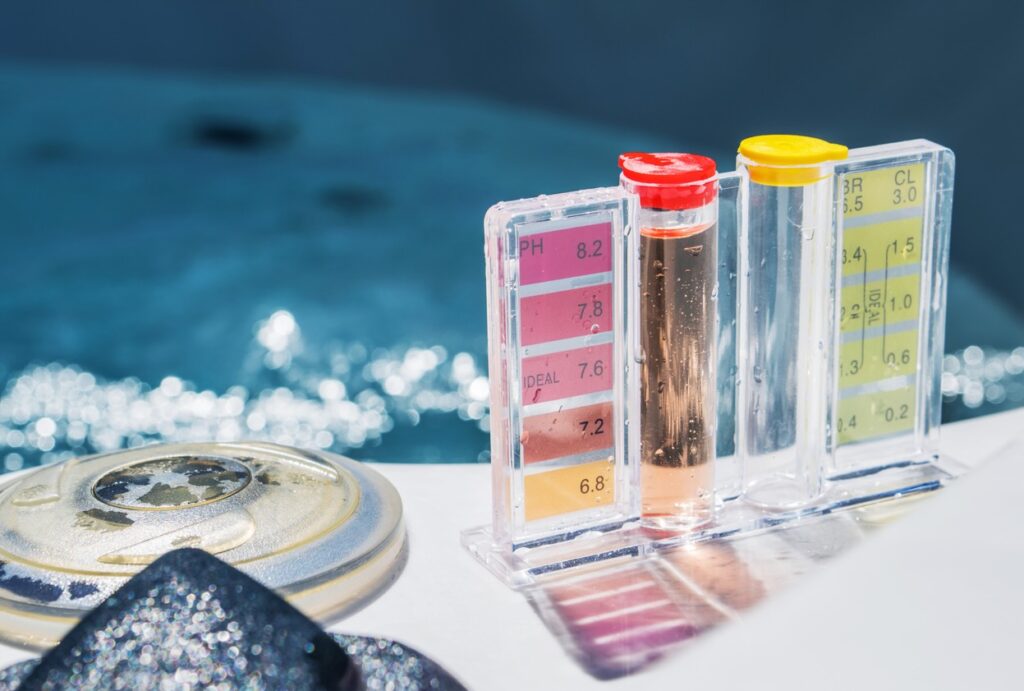
The Short Answer: To raise alkalinity in a hot tub, add an alkalinity increaser gradually while running the jets, wait 4–6 hours, then retest and repeat as needed until levels reach the ideal range of 80–120 ppm. Maintaining proper alkalinity is essential because it acts as a pH buffer, protecting the water from pH fluctuations that can cause equipment corrosion, skin irritation, and cloudy water.
When it comes to maintaining your hot tub water chemistry, one of the most important factors to focus on is total alkalinity. Without proper alkalinity levels, your hot tub can become an uncomfortable and potentially unsafe place to relax. Raising alkalinity in a hot tub is a quick and simple process, and it’s an essential part of keeping your spa water clear and your equipment working properly.
What Are Total Alkalinity Levels?
Total alkalinity refers to the water’s ability to resist changes in pH. It acts as a pH buffer for your hot tub water. This buffering capacity keeps your water chemistry stable by preventing rapid changes in acidity or alkalinity. The ideal alkalinity range for a hot tub is between 80-120 ppm (parts per million). If the alkalinity is too low, it leaves your water vulnerable to sudden shifts in pH, which can lead to a host of problems.
The relationship between alkalinity and the pH scale is crucial because when alkalinity levels are outside the ideal range, hot tub pH levels can fluctuate uncontrollably. This can lead to:
- Corrosion: Low alkalinity can lead to fluctuations that make your water acidic, which may damage your hot tub’s heater, pump, and plumbing.
- Skin and Eye Irritation: Low pH levels can leave you with eye or skin irritation after a swim.
- Cloudy Water: Alkaline water, or water with high pH levels, can cause your water to become cloudy and murky.
- Algae Growth: Algae thrives in poorly balanced water, and with lower alkalinity levels, your chances of an algae bloom increase.
Keeping the levels of all alkaline substances in your hot tub balanced helps maintain safe water conditions and the longevity of your tub.
Signs Your Hot Tub Has Low Alkalinity
If you suspect your hot tub water chemistry is out of balance, there are a few common symptoms to look for that can indicate low alkalinity:
- Erratic pH Readings: If your pH levels won’t stabilize, low alkalinity is likely the cause.
- Corrosion: Signs of corrosion might appear on metal parts, such as the heater or jets.
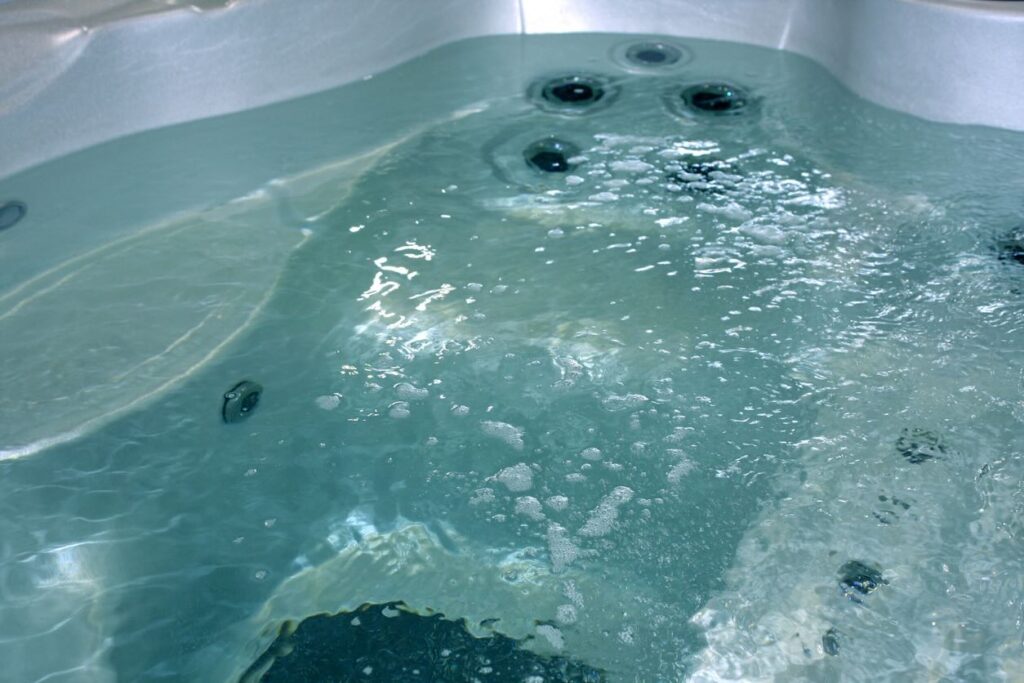
- Green Tint: A greenish tint, one of the primary signs of algae growth, might be visible in the water.
- Etching on Acrylic Surfaces: Low alkalinity can cause the water to become acidic, leading to damage on the acrylic surfaces of your hot tub.
- Foamy or Cloudy Water: Low alkalinity can result in the appearance of cloudy or foamy water, which not only looks unappealing but can also affect water quality.
How to Test Alkalinity Levels
Before you can raise alkalinity in your hot tub, you’ll need to test the current alkalinity levels. There are a few different ways to do this:
- Test Strips: The quickest and easiest way to check alkalinity, though it’s not always the most accurate.
- Liquid Test Kits: These offer more precision and can help you measure both alkalinity and pH levels.
- Digital Testers: For the most accurate results, digital testers provide a detailed and accurate reading of your water chemistry.
Hot tub water chemistry should be tested at least 2-3 times a week, especially if you use your tub frequently. After testing, the goal is to make sure your alkalinity is within the 80-120 ppm range. If it’s lower, it’s time to add an alkalinity increaser.
How to Raise Alkalinity in Your Hot Tub
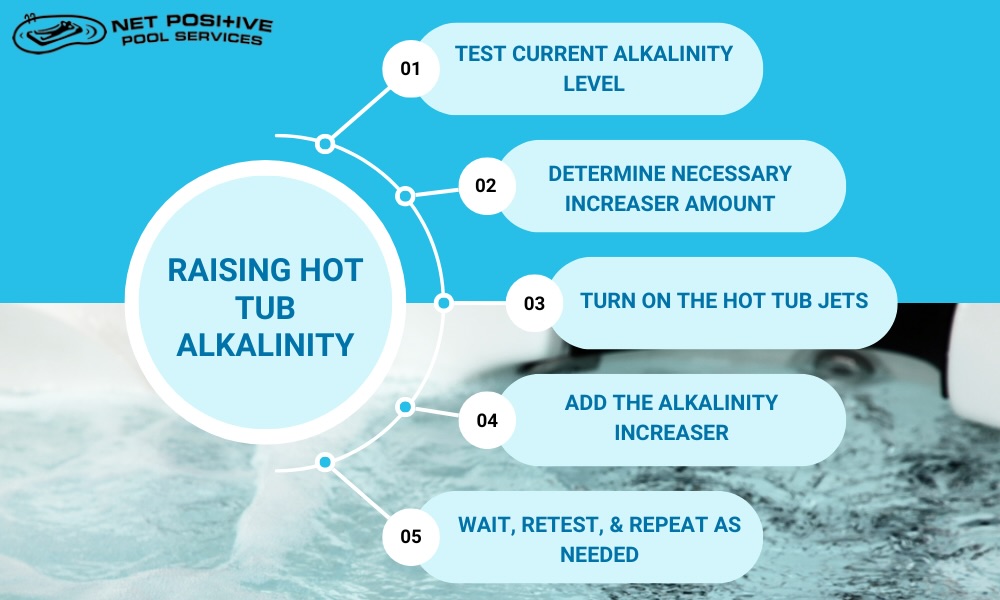
Once you’ve found that your hot tub water alkalinity is low, follow these steps to raise it:
- Test Current Alkalinity Level: Always start by confirming the alkalinity level to know how much increaser you need.
- Calculate Necessary Increaser: Based on your tub’s volume, calculate how much alkalinity increaser you’ll need. Each product’s packaging will provide specific instructions on how much to use.
- Turn on Jets: Keeping your spa jets running helps the alkalinity increaser mix more effectively in the water.
- Add the Increaser: Pour the alkalinity increaser around the edges of the pool, gradually adding it in small amounts.
- Wait & Retest: After adding the increaser, let the water circulate for 4-6 hours, then retest the alkalinity.
- Repeat As Necessary: If the alkalinity is still too low, repeat the process until you reach the ideal range of 80-120 ppm. To avoid adding too much increaser, add multiple small adjustments instead of one large one.
Alkalinity Increaser vs. Baking Soda
Both alkalinity increasers and baking soda can be effective for raising alkalinity because they both contain sodium bicarbonate. However, they have some crucial differences.
- Baking soda is an affordable option that works well for larger alkalinity adjustments.
- Alkalinity increasers often contain additional buffers or may be more finely ground for faster dissolution, making them a great option for smaller adjustments.
Some homeowners use baking soda as an economical option for raising alkalinity. However, it doesn’t have many of the buffers that commercial alkalinity products have. It’s best to trust a hot tub professional to avoid potential issues with alkalinity, especially for specific water chemistry adjustments.
Tips for Maintaining Balanced Alkalinity
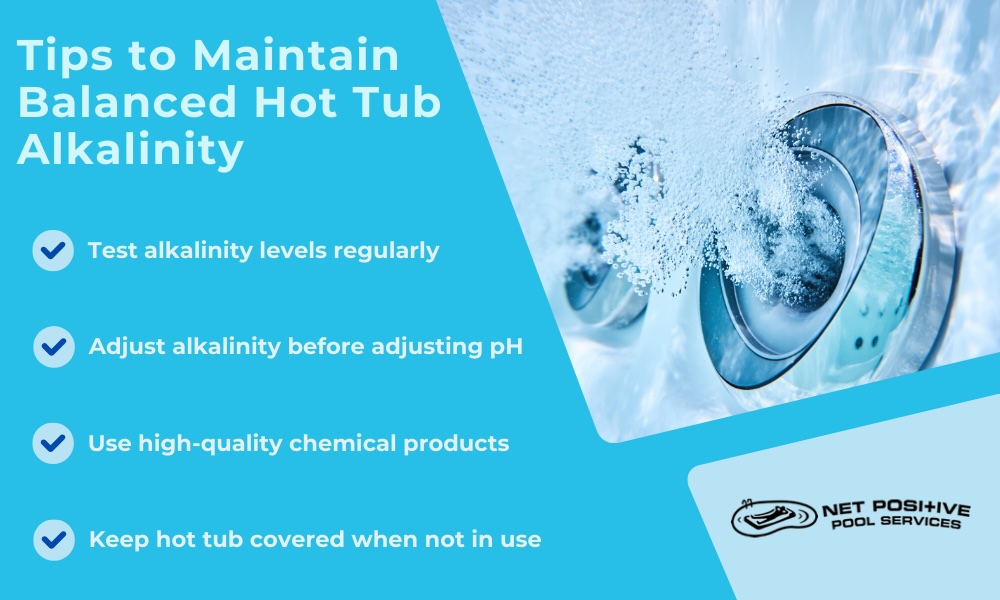
Once you’ve raised your total alkalinity to the correct level, you’ll want to maintain it. Here are a few tips to help keep things balanced:
- Test Regularly: Regular testing of your hot tub water is key to maintaining balance. Test 2-3 times a week to ensure the alkalinity stays within range.
- Adjust Alkalinity First: When balancing your hot tub, adjust alkalinity before adjusting pH levels. This ensures the right chemical balance before fine-tuning the pH.
- Use Quality Chemicals: For the best results, avoid cheap, off-brand chemicals. Stick to high-quality chemical products that are designed for hot tub maintenance.
- Keep a Maintenance Log: Keeping track of your water chemistry and maintenance tasks helps you stay on top of adjustments and avoid issues in the future.
- Cover Your Hot Tub: When your tub isn’t in use, keep it covered to prevent debris and dirt from affecting the water, which can throw off your water chemistry.
Choosing Net Positive Pools for Hot Tub Care
At Net Positive Pools, we offer pool services, equipment repair, and maintenance in North Carolina, South Carolina, and Georgia. With years of experience in pool and hot tub care, we provide hot tub owners with expert services that keep their spa in perfect condition. Net Positive Pools offers regular maintenance services to ensure your hot tub is always ready for use, including necessary adjustments to achieve proper pH and alkalinity levels. If you’re ready to purchase your first spa or upgrade your current one, we also offer a wide selection of premium hot tubs for sale.
Let us help you keep your hot tub clean, balanced, and comfortable. Contact Net Positive Pools today to schedule your professional hot tub service today.


