How to Backwash a Pool Filter
At a Glance: Backwashing is the process of reversing water flow through a sand or DE filter to flush out trapped dirt, debris, and contaminants that accumulate during normal operation. The process involves turning off the pump, switching the multiport valve to the backwash position, running the pump for 2-3 minutes until the water runs clear, then completing a second rinse cycle before returning to normal filtration.
A clean pool filter is one of the most important factors in keeping swimming pool water clear and safe, but many pool owners are unsure when or how to backwash their filter. Backwashing reverses the flow of water through the filter to flush out trapped dirt, debris, and contaminants that accumulate during normal operation.
Regular backwashing maintains filter efficiency, reduces strain on the pump, and helps prevent water quality issues. Understanding the backwash process for your specific filter type matters because sand and DE filters require backwashing while cartridge filters do not.
What Is Backwashing?
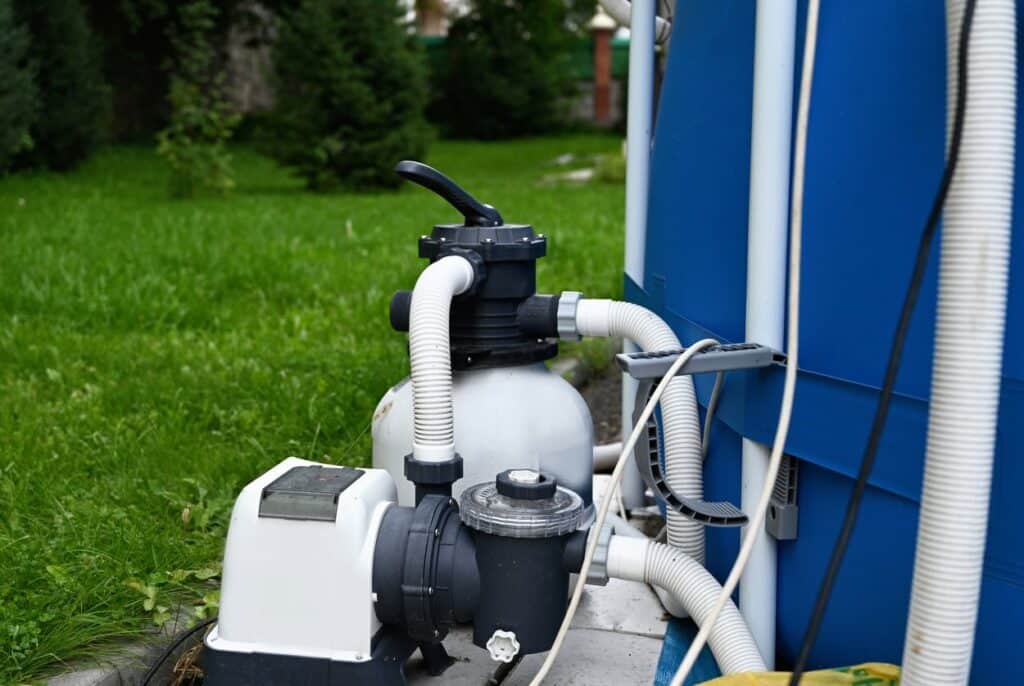
Backwashing is the process of reversing water flow through the filter to flush out debris. During normal filtration, water flows through the filter media and particles get trapped. Over time, these trapped particles restrict water flow and reduce filter effectiveness. Backwashing sends water backward through the filter media, dislodging trapped particles and expelling dirty water through the waste line or backwash hose. This process cleans the filter media without removing it from the housing.
Backwashing applies only to sand filters and DE (diatomaceous earth) filters. Cartridge filters use a different cleaning process that involves removing the cartridge element and hosing it off manually.
Why Backwashing Your Swimming Pool Filter Is Important
Backwashing maintains filter efficiency by removing debris that prevents the filter from trapping new particles. Proper filtration keeps pool water clear and inviting for swimmers. When a filter becomes too clogged, water simply bypasses the media rather than flowing through it, reducing filtration to almost nothing.
Regular backwashing also protects pool equipment. Clogged filters increase pressure on the pump, and high pressure can damage pump seals, o-rings, and other components over time. Regular backwashing saves money by preventing equipment damage and reducing the need for professional service calls. The process also improves water quality by removing trapped contaminants before they break down and return to the pool, supporting proper circulation and helping maintain chemical balance.
When to Backwash Your Pool Filter
Filter Pressure Gauge
The filter’s pressure gauge is the most reliable indicator of when to backwash. Monitor the gauge regularly and note the clean or baseline pressure after a fresh backwash. When pressure rises 8-10 PSI above this baseline, it’s time to backwash.
Visual Signs
Cloudy or hazy pool water despite proper chemical levels, reduced water flow from return jets, a pool cleaner moving slowly or losing suction, and visible debris returning to the pool through returns all suggest the filter needs attention.
Usage
Backwash after heavy use or storms, including pool parties with high swimmer loads, storms that blow debris into the pool, algae treatments, or vacuuming large amounts of debris. Most pools benefit from backwashing every 1-4 weeks depending on usage and environment. Avoid over-backwashing, as some debris buildup actually improves sand filter efficiency.
How to Backwash a Sand Filter
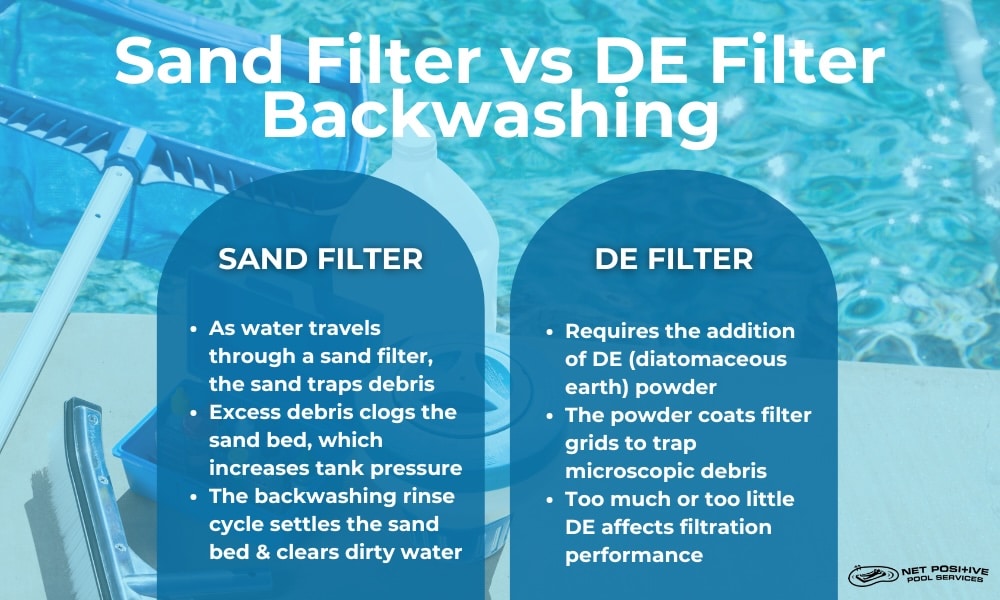
To backwash a sand filter, you need a backwash hose if one is not permanently connected and access to the multiport valve. Start by turning off the pool pump completely. Attach the backwash hose to the waste port if not already connected and direct the hose to an appropriate drainage area such as a lawn area, street drain, or designated waste line.
Turn the multiport valve handle to the Backwash position. Never turn the valve while the pump is running, as this can damage the valve internals. Turn the pump back on and watch the sight glass or the end of the backwash hose for water clarity. Run the backwash for 2-3 minutes or until the water runs clear.
After backwashing, turn the pump off and move the valve to the Rinse position. Turn the pump on and run the rinse cycle for 30-60 seconds. This step settles the sand bed and clears dirty water from the plumbing before it returns to the pool. Turn the pump off, return the valve to the Filter position, and turn the pump back on to resume normal operation. Check and record your new baseline pressure.
How to Backwash a DE Filter
DE filter backwashing follows a similar process but requires adding fresh DE powder afterward. You need a backwash hose, fresh DE powder for recharging, and a measuring cup or scoop. Turn off the pool pump, attach and position the backwash hose, and turn the valve to the Backwash position. For vertical DE filters, open the backwash valve instead.
Turn the pump on and backwash for 2-3 minutes or until water runs clear. Turn the pump off, move the valve to the Rinse position if equipped, turn the pump on for 30-60 seconds, then turn the pump off. Return the valve to the Filter position and turn the pump on.
With the pump running, add fresh DE powder through the skimmer. Check your filter manufacturer specifications for total DE capacity. After backwashing, add a certain percent of total capacity depending on manufacturer recommendations. A typical amount is 1 pound of DE per 10 square feet of filter area. Measure carefully because too much or too little DE affects filtration performance. DE powder coats the filter grids and does the actual filtering, so you must add fresh DE after every backwash.
Common Backwashing Mistakes to Avoid
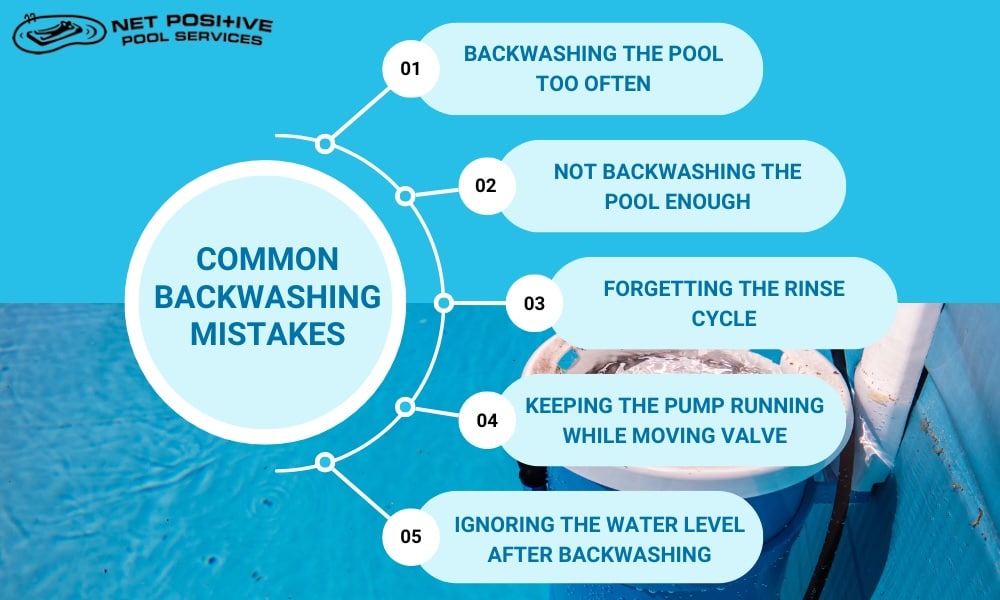
- Backwashing Too Frequently: This wastes water and chemicals while reducing sand filter efficiency. Some debris buildup actually helps sand filters trap smaller particles, so wait until pressure rises 8-10 PSI above baseline before backwashing.
- Backwashing Too Infrequently: This strains the pump, prevents effective filtration, and can cause filter media channeling or damage over time.
- Forgetting the Rinse Cycle: The sand bed needs to resettle after backwashing, and the rinse cycle clears dirty water from the plumbing lines. Always rinse for 30-60 seconds after every backwash.
- Moving the Valve While the Pump is Running: This can damage valve internals and gaskets and may cause water hammer in the plumbing. Always turn the pump off before changing valve positions.
- Not Adding DE After Backwashing: For DE filters, this is a serious mistake. Running without DE damages the filter grids and provides virtually no filtration since the DE powder does the actual particle trapping. Measure DE carefully for proper coverage according to manufacturer specifications.
- Ignoring Water Level After Backwashing: The backwashing process removes a significant amount of water from the pool, and low water levels can cause the pump to lose prime or run dry. Check the water level and add water if it drops below the skimmer opening.
Keep Your Pool Equipment in Peak Shape with Net Positive Pools
Backwashing is a simple but important maintenance task that keeps sand and DE filters working efficiently by flushing out accumulated debris. Monitoring filter pressure and backwashing at the right time protects equipment, maintains water clarity, and extends filter life. Proper technique including the rinse cycle and adding DE powder for DE filters ensures the best results.
Professional weekly maintenance and filter cleaning services can help ensure your filter stays in top condition year-round. At Net Positive Pools, we offer a variety of pool services in North Carolina and South Carolina that help homeowners keep their pool crystal-clear all season long. Contact Us today to get in touch with a pool expert in your area.