How Long Do Pool Pumps Last: A Guide to Getting the Most Out of Your Pool Pump
At a Glance: A pool pump is one of the most important parts of your swimming pool’s filtration system. While the exact lifespan depends on the pump type, usage, and maintenance routine, regular care can help you get the most out of your equipment. Understanding how your pump works and what warning signs to watch for can help you make better decisions about repairs and replacement.
Your pool pump plays a major role in keeping water circulating, supporting your filtration system, and helping maintain clear pool water. Cleaning the pump basket, maintaining balanced pool water, monitoring performance, and scheduling repairs when problems appear can help protect your pool pump and prevent larger issues. Knowing how your pump operates, what affects its performance, and when it may need service can help you protect your investment and avoid unexpected equipment problems.
How Long Does a Pool Pump Last?
Pool pumps experience normal wear over time because they run regularly to circulate water through the filtration system. The lifespan of your pump depends on several factors, including the type of pump, how often it operates, whether it is properly maintained, and whether it is the right fit for your pool.
The pump you choose can also impact how efficiently your system operates. Single-speed pumps run at one set speed, while variable speed pool pumps allow homeowners to adjust operating speeds based on their pool’s needs. Variable speed pumps offer programmable speed settings that allow homeowners to customize operation for filtration, cleaners, and other pool features.
A variable speed pump can run at a lower speed during normal circulation and increase speed when additional flow is needed. This flexibility can improve energy efficiency while allowing your pool equipment to operate based on actual demand instead of running at maximum power all the time.
Other factors, such as pool size and the amount of filtration your pool requires, also affect how your pump performs. Choosing the right pump for your pool helps your equipment maintain proper circulation without unnecessary strain.
What Factors Affect a Pool Pump’s Lifespan?
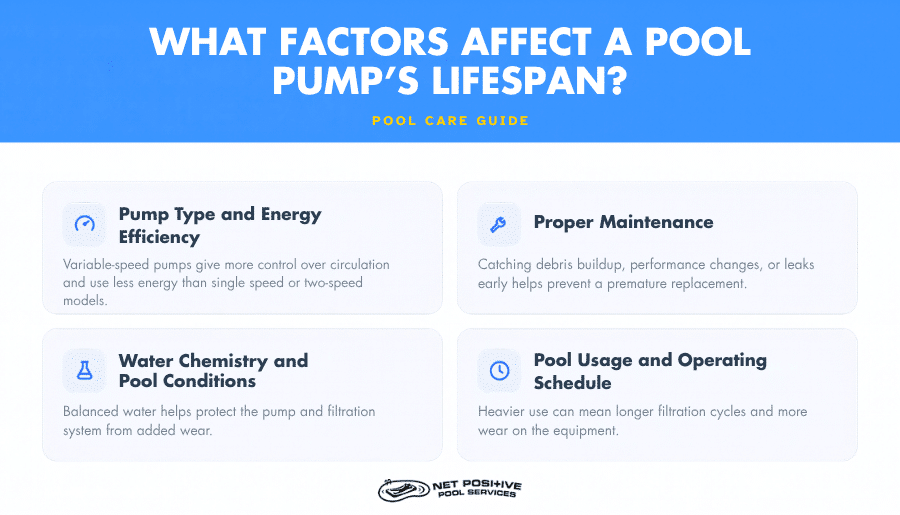
Pump Type and Energy Efficiency
The type of pool pump you have affects how it operates day after day. Traditional single speed pumps operate at one speed, two-speed pumps offer two operating settings, and variable-speed pumps allow for more control over circulation.
Single Speed Pumps
Single speed pumps run at one set speed whenever they are turned on. While they can provide reliable circulation, they do not allow homeowners to adjust the pump’s output based on the pool’s needs.
Double Speed Pumps
Double speed pumps, also called two-speed pumps, offer two operating settings: a lower speed for routine circulation and a higher speed for tasks that require additional flow. This allows pool owners to use less power during everyday filtration while still having access to a higher setting when needed.
Variable-Speed Pumps
Variable-speed pumps provide even more flexibility by allowing homeowners to adjust the pump speed more precisely. Instead of choosing between only two settings, variable speed pool pumps can be programmed for different circulation needs, including filtration, cleaners, and other pool features.
Using a lower speed when possible can help reduce energy use while maintaining proper circulation. This makes variable-speed pool pumps a popular choice for homeowners looking to improve energy efficiency and better manage their pool equipment.
Proper Maintenance
Regular maintenance plays an important role in protecting you from a premature pool pump replacement. Small issues like debris buildup, changes in performance, or leaks can affect how efficiently your equipment operates.
Keeping up with weekly pool maintenance can help identify problems before they lead to larger equipment repairs.
Water Chemistry and Pool Conditions
Proper water chemistry also helps protect your pool equipment and filtration system. Without proper maintenance, pool equipment may experience additional wear. Regular testing and adjustments help protect your investment and support better water quality.
Pool Usage and Operating Schedule
How often your swimming pool pump runs can affect how much wear the equipment experiences. Pools with heavier use may require longer filtration cycles to maintain proper circulation. Maintaining proper filtration and recirculation is an important part of pool operation.
Signs Your Pool Pump May Need Repair or Replacement
Even with proper care, pool pump repair and maintenance are still essential. Knowing what signs to watch for can help you address problems before they affect your entire pool system.
Strange Noises Coming From the Pump
Your pool pump should operate with a consistent sound during normal use. If you notice new or unusual noises, it may be a sign that your equipment needs inspection.
- Grinding
- Rattling
- Clicking
- Screeching
- Squealing
- Gurling
Regular inspections can help identify changes in sound and other issues before they become larger repair concerns.
Reduced Water Flow
A pump that is not moving water properly can affect your pool’s filtration system and overall water quality. Reduced circulation may make it harder for your pool filter to remove debris and keep water clear.
Leaks Around the Pump Housing
Water around the pump housing can indicate a problem that needs attention. Leaks may affect the pump’s performance and should be inspected before they create additional equipment issues.
Increased Energy Use
Older equipment may not operate as efficiently as it once did. If your pool pump requires more energy to maintain the same level of performance, upgrading to a newer, more efficient model may be worth considering.
How to Extend Your Pool Pump’s Lifespan
Clean the Strainer Basket Regularly
The strainer basket helps collect debris before it reaches the pump. Allowing debris to build up can restrict water flow and affect pump performance. Regular inspection and cleaning of pump components can help maintain proper operation and identify potential issues early.
Maintain Proper Water Chemistry
Keeping your pool water balanced helps protect your pool equipment. Regular testing allows you to monitor pH and sanitizer levels and make adjustments when needed.
Address Problems Early
Small issues are easier to manage when they are caught early. Strange noises, leaks, reduced circulation, or changes in performance should not be ignored. Scheduling professional service can help determine whether your pump needs a repair or if replacement is the better option.
Upgrade When Needed
Technology continues to improve, and newer pool pumps can provide homeowners with more control over their pool equipment.
When Should You Replace Your Pool Pump?
A pool pump repair may be enough for some problems, but replacement may make more sense when issues continue happening or the equipment no longer performs efficiently.
Signs that it may be time for a replacement include:
- Frequent repairs
- Poor circulation
- Declining performance
- Difficulty maintaining water quality
- Increasing operating costs
Keep Your Pool Equipment Running Efficiently With Net Positive Pools
Your pool pump plays an important role in maintaining clean, properly circulated water. Regular cleaning and repairs can help your equipment continue operating effectively.
Pool pump repair, timely maintenance, and equipment services are designed to help homeowners protect their pools throughout the year. Whether you need help with an aging pump or routine maintenance, our team can help you find the right solution.
Contact us to reach a pool expert in your area and learn more about our complete pool services.