How to Find a Pool Leak: Everything You Need to Know About Pool Leak Locating
Noticing your pool water level dropping faster than usual? You might have a leak. Locating a pool leak starts with simple DIY tests like the bucket test to confirm you actually have a problem. From there, you can try visual inspections and dye testing for obvious issues. But when it comes to underground leaks or problems in your plumbing system, professional leak detection using advanced technology is the way to go. Catching leaks early saves you money on water bills, prevents damage to your pool structure and surrounding areas, and keeps your pool in great shape for years to come.
Let’s walk through everything you need to know about finding and fixing pool leaks.
Signs Your Swimming Pool Might Be Leaking
Before you start tearing apart your pool deck looking for problems, you need to figure out if you actually have a leak or if you’re just dealing with normal evaporation. Here’s what to watch for:
Common Warning Signs:
- Water level dropping more than ¼ inch per day
- Soggy spots in your yard near the pool
- Cracks appearing in concrete slabs around your pool deck
- Your pump is running constantly to maintain water pressure
- A sudden spike in your water bill
- Algae blooming more than usual (fresh water from leaks dilutes your pool chemicals)
The Bucket Test: Your First Step
This simple test tells you whether you’re losing water to evaporation or an actual leak. Here’s how to do it:
- Fill a bucket with pool water about 3-4 inches from the top
- Place the bucket on your pool steps (weigh it down so it doesn’t float)
- Mark the water level inside the bucket and on the pool wall
- Wait 24 hours without using the pool
- Compare the two water levels
If the pool water dropped more than the bucket water, you’ve got a leak. If they dropped the same amount, it’s just evaporation.
The bucket test works because it accounts for environmental factors like heat and humidity that affect both your pool and the bucket equally. When your pool loses more water than the bucket, something else is going on.
How to Locate a Pool Leak Yourself
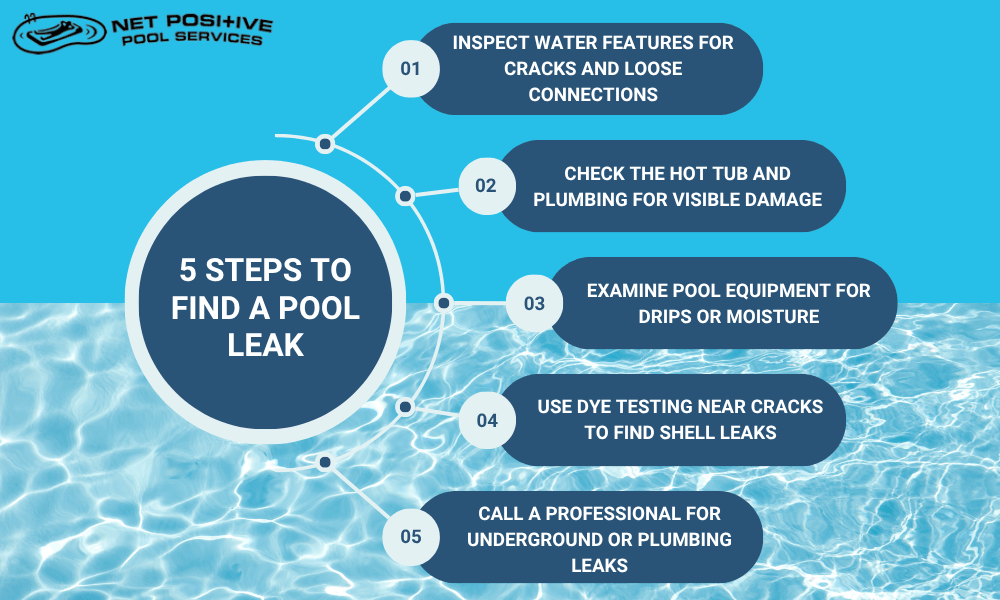
Once you’ve confirmed a leak exists, it’s time to play detective. Some leaks are easy to spot, while others hide underground or deep in your plumbing lines.
Visual Inspection Basics
Start by looking for obvious problems:
- Check all water features: Waterfalls, fountains, and spillways are common leak spots. Look for cracks or loose connections.
- Inspect your hot tub: If you have a spa connected to your pool, check the shared plumbing and the hot tub shell for damage.
- Examine pool equipment: Look at pump connections, filter housings, and heater pipes for drips or moisture.
- Walk around your pool deck: Soft spots, settling, or constantly wet areas point to underground leaks beneath concrete slabs.
Dye Testing for Shell Leaks
Got a suspicious crack or gap? Dye testing helps confirm if it’s leaking:
- Get some leak detection dye (food coloring works in a pinch)
- Hold still in the water near the suspected spot
- Slowly squeeze dye near the area
- Watch the dye: if it gets sucked into a crack or gap, you found your leak location
Dye testing works great for shell leaks you can see and reach. It shows you the exact location of the problem without any digging or equipment.
When DIY Methods Fall Short
Here’s the thing: you can find leaks in visible areas pretty easily. But DIY methods struggle with:
- Underground leaks you can’t see
- Problems deep in your plumbing system
- Leaks in commercial water lines or complex setups
- Finding leaks in hot tubs with intricate plumbing lines
Guessing wrong leads to unnecessary digging, wasted money, and still having a leak. That’s when professional help makes sense.
Advanced Technology for Accurate Leak Detection
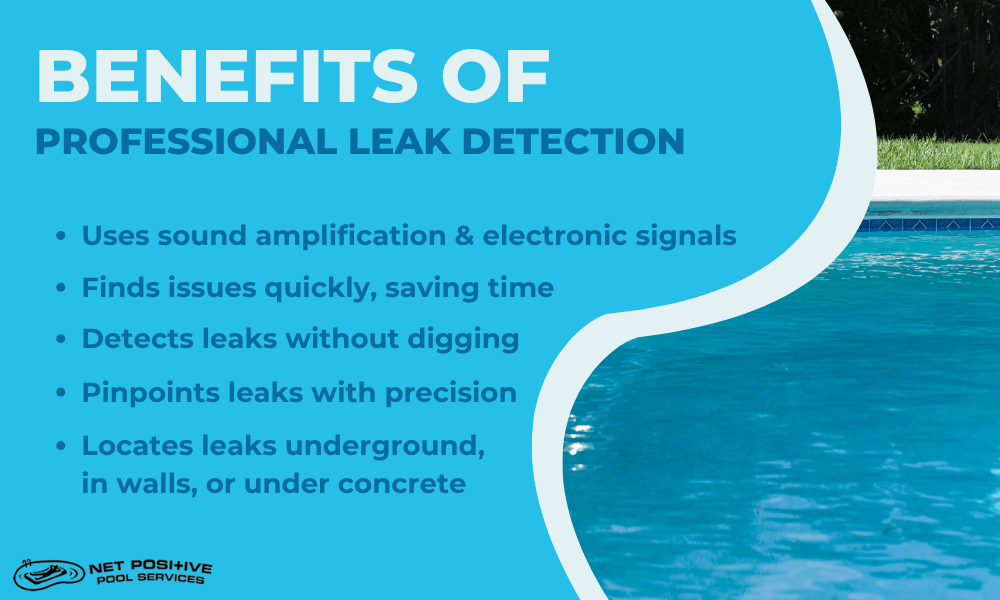
Professional pool leak detection uses specialized equipment that pinpoints problems without tearing up your yard. Here’s what the pros bring to the table:
Electronic Leak Detection
Modern water leak detectors use electronic signals to locate problems with pinpoint accuracy. These pool leak detectors work by:
- Sending electronic signals through water and listening for changes
- Using stronger sound amplification to hear leaks through ambient water noise
- Detecting pressure changes in your plumbing system
- Finding the exact location of leaks underground, in walls, or under concrete slabs
A quality leak detector is a must-have tool for finding hidden problems. These innovative tools can locate issues that would take days or weeks to find through trial and error.
Pressure Testing for Plumbing Systems
Pressure testing isolates which plumbing line has the problem:
- Individual lines get sealed off and pressurized
- Technicians monitor pressure levels
- Dropping pressure indicates a leak in that specific line
- The test works for pool plumbing, water features, hot tubs, and even commercial water lines
This non-invasive leak detection method saves you from digging up your entire yard hoping to stumble across the problem.
Why Professional Equipment Matters
Professional leak detection kits combine cutting-edge technology with years of experience. The benefits include:
- Minimal disruption: No random holes dug around your property
- Speed: Pros locate leaks in hours instead of days
- Accuracy: Finding the exact location means permanent solutions, not temporary patches
- Versatility: Works on pools, hot tubs, water features, and complex plumbing systems
Types of Hidden Leaks Professionals Find
Here’s what advanced technology can detect that you might miss:
- Water leaks deep underground where you’d never see surface evidence
- Pressure problems in plumbing lines that only show up under testing
- Structural cracks in the pool structure that are hidden by tile or plaster
- Leaks in the circulation system, where ambient noise makes them impossible to hear
- Problems in multiple locations that DIY methods might confuse as one leak

Calling in the pros costs money upfront. But finding leaks yourself and getting them fixed right the first time costs way less than dealing with ongoing water loss and damage.
The Real Cost of Ignoring Pool Leaks
Every day that you have a leak:
- You’re watching money drain away with water loss
- Your pool structure can suffer damage from shifting soil
- Surrounding concrete slabs may crack or settle
- Your water bill keeps climbing
- You waste time and chemicals trying to maintain proper pool water chemistry
A small leak today becomes an expensive problem tomorrow. Water finds its way everywhere, and once it starts causing structural damage, repair costs skyrocket.
The Net Positive Pools Advantage
At Net Positive Pools, we’ve been helping pool owners across North and South Carolina and Georgia since 2018. Our team doesn’t just detect leaks; we fix them. We handle everything from finding a tiny crack with dye testing to using advanced technology for complicated underground leaks.
Our leak detection service is part of our complete pool care approach. We can locate your leak, repair it properly, and keep your pool maintained so problems don’t come back. No running around trying to coordinate different companies. We handle it all with minimal disruption to your routine.
Getting Back to Enjoying Your Pool
Nobody buys a pool to stress about water levels and mystery leaks. You want to swim, relax, and enjoy time with family. That’s where we come in.
Our trained technicians use the same cutting-edge technology and innovative tools as the big guys, but we treat you like a neighbor, not a ticket number. We’ll walk you through what we find, explain your options, and help you make the best choice for your situation and budget.
Whether you suspect a leak or you’re dealing with dropping water levels and can’t figure out why, give us a call. We’ll run a proper bucket test if needed, check your pool equipment, inspect your hot tub and water features, and use our professional leak detection equipment to find exactly what’s going on.