5 Signs Your Pool Needs Service
At a Glance: Your pool sends noticeable signals when something is off, and most show up in the water or the equipment. The five signs worth watching are cloudy or discolored water, strange noises from the pump, weak water flow, water that will not hold its chemical balance, and visible cracks or surface damage. Catching these early can prevent costly repairs and larger equipment issues.
A swimming pool is built to run quietly, which is what makes early problems easy to overlook. Small shifts in how your pool water looks, how your pool pump sounds, or how well your chemical levels hold can point to a part of the system that needs attention.
Learning to read each warning sign helps a pool owner act before things get worse. Here are five signs your pool needs service, what each one means, and when professional attention is necessary.
Why Your Pool’s Warning Signs Matter
Small Problems Turn Into Costly Repairs
A small issue can rarely stay small. A clogged filter restricts circulation and can put added strain on the filtration system and pool pump. Trouble with circulation, pumps, filters, or other pool equipment that isn’t addressed can build toward equipment failure.
Maintenance Prevents Expensive Repairs
Regular maintenance and regular inspections catch these concerns before they can turn into expensive repairs. Routine cleaning and a timely repair also stretch the life of your gear and keep a well-maintained pool running at peak performance.
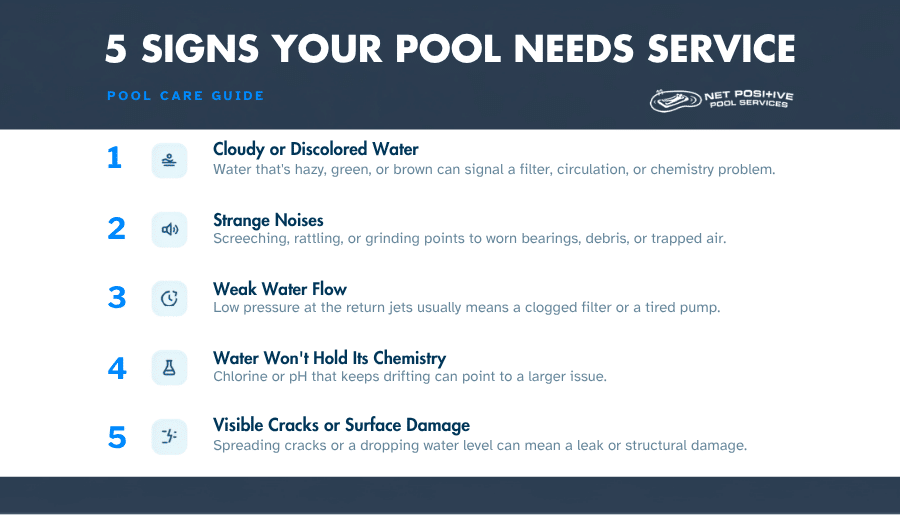
1. Cloudy or Discolored Water
Clear water is one of the first signs of a healthy swimming pool, so lingering haze or an odd color is worth a closer look.
What Causes Cloudy Pool Water?
Cloudy water can have several causes:
- Weak filtration
- Poor circulation
- Suspended debris
- Algae growth
- Chemical imbalance
Is Cloudy Pool Water Safe to Swim In?
Pool visibility should be dealt with for important safety reasons. Pool water should be clear enough for swimmers and those watching them to see below the surface. Water that is so cloudy that you cannot see the bottom or main drain is a sign that the pool is not safe to use.
What to Check When Water Stays Cloudy
Check the filtration system, circulation, chlorine levels, pH, and overall water quality. If the water stays cloudy after normal cleaning and chemical balancing, the filter, circulation, or chemistry may need a professional inspection.
2. Strange Noises From the Pump
A pump in good shape holds a steady sound, so a new or unusual noise is worth looking into. Squealing or screeching and a gravelly sound can mean loose hardware, debris, or that the pump is starved for water. Air pulled in on the suction side changes how the pump runs, so check the pump housing, pump basket, water level, and visible plumbing connections first.
Do Variable Speed Pumps Run Quieter?
A variable speed pump usually runs quieter than an older single-speed model and brings energy and filtration benefits. They can also have less maintenance and last longer than traditional models. Grinding, overheating, or worsening strange noises are your cue to get professional attention for your pool pump. Booking pool pump repair early can prevent damage to the motor and nearby equipment.
3. Weak Water Flow or a Struggling Filter
Weak water flow from the return jets can point to a circulation problem or a tired pool filter.
Common culprits of weak water flow include:
- Dirty filter
- Blocked baskets
- Obstruction in the plumbing
- Valves in the wrong position
- Pumps that are not pulling their weight
When to Clean or Backwash Your Filter
A dirty cartridge filter restricts circulation, while sand and DE systems require cleaning or backwashing according to the manufacturer’s instructions. Many filters call for a cleaning or backwash once pressure climbs 10 PSI or more above the clean starting point, but always follow the guidance for your model.
Cartridge vs. Sand and DE Filter Cleaning
The method depends on the filter. A cartridge filter uses a rinse rather than a backwash, while a sand filter or DE filter runs a backwash cycle. If a filter cleaning does not restore circulation, the filter medium, internal parts, plumbing, or pump may need a closer inspection.
4. Water That Will Not Hold Its Chemistry
Why Won’t My Pool Hold Chlorine or pH?
Chemistry that keeps drifting is another sign that your pool needs attention. When chlorine levels or pH repeatedly move out of range after adjustment, the cause may involve water chemistry, contaminants, circulation, or sanitation issues rather than simply adjusting chemical levels.
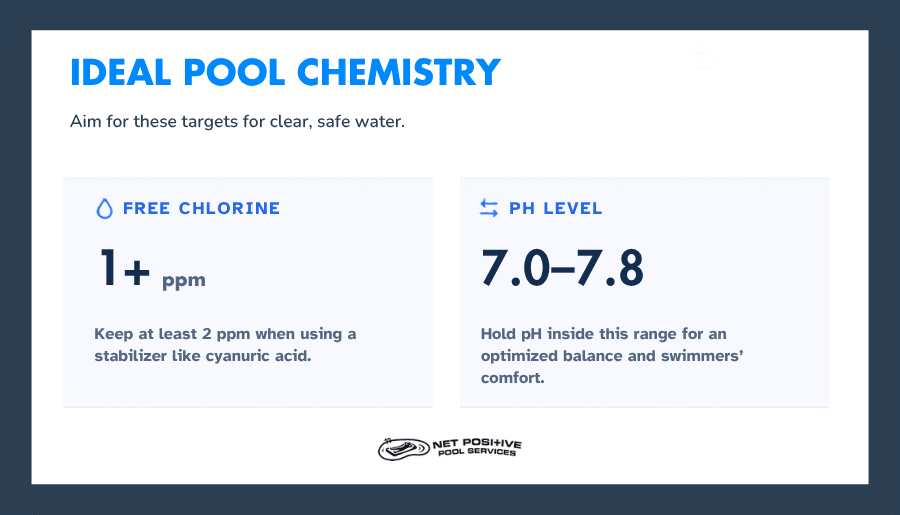
Ideal Chlorine and pH Levels (CDC Guidelines)
For residential pools, the Center for Disease Control and Prevention (CDC) recommends free chlorine levels of at least 1 ppm, or at least 2 ppm, and pH between 7.0 and 7.8. Manage your pool chemicals to those targets alongside the product label and your equipment manual.
When Balancing Doesn’t Work
If the chemistry still will not settle after water testing and proper chemical balancing, circulation or sanitation of equipment may be the next place to look.
5. Visible Cracks or Surface Damage
Cosmetic Wear vs. Structural Damage
Cracks, wear, or other changes to the pool surface run from cosmetic to a warning of something bigger. A few small imperfections are not proof of structural damage on their own, but cracks that keep widening, repeated water loss, movement around the deck, or heavy deterioration are worth an inspection.
Evaporation or a Leak?
A dropping water level is another clue. Pools naturally lose water through evaporation, and the amount varies based on temperature, wind, humidity, sunlight, and other weather conditions. If unexplained loss keeps up, a simple bucket test separates evaporation from a possible leak, and leak detection equipment can pinpoint the source.
What Pool Owners Should Call a Pro
Plenty of basic pool care is fine to keep up on your own. Equipment repairs, stubborn leaks, electrical work, and chemistry imbalance are often better handled by a qualified professional with training relevant to the equipment involved.
When a problem calls for equipment repairs, immediate expert attention can lower the odds of extra damage.
Keep Your Pool in Shape With Net Positive Pools
Noticing these five signs early helps you fix pool problems before they grow into bigger repairs. Cloudy water, unusual pump sounds, weak circulation, unstable chemistry, and surface damage each point to a part of the system that needs attention.
Weekly pool maintenance, pool pump repair, filter cleaning, equipment repair, and water testing can help keep your water clear and equipment working. Net Positive Pool Services has a team of pool experts who can help you understand what your pool is trying to tell you. Contact us today to reach a pool expert in your area and keep your pool clean, balanced, and ready to swim.