How to Test Pool Water
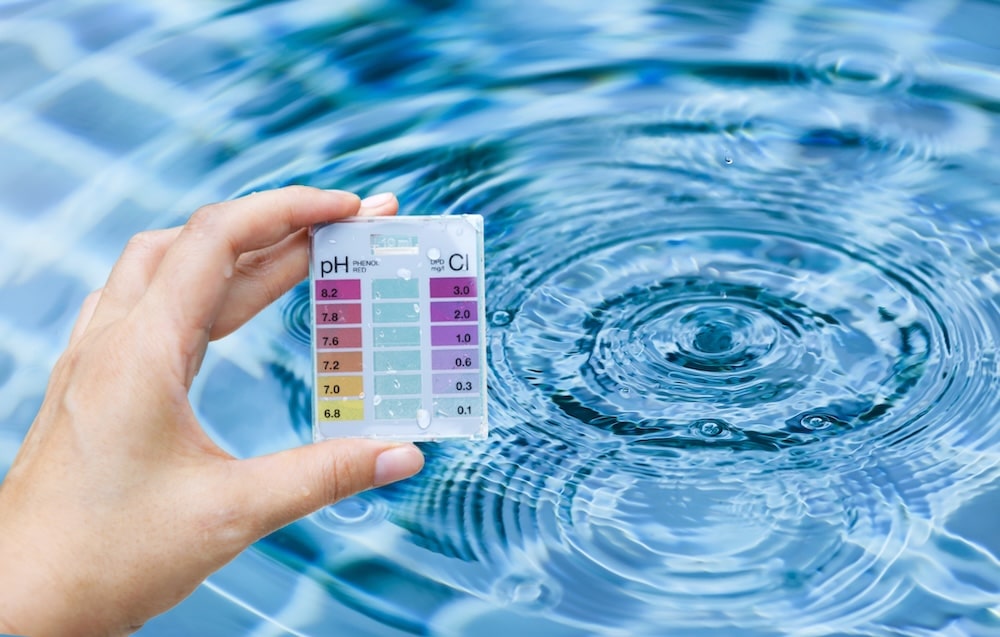
At a Glance: A pool water test includes checking free chlorine, pH, total alkalinity, cyanuric acid, calcium hardness, and, for saltwater pools, the salt level. Reach well below the surface to collect a sample away from the return jets after the water has circulated. Test strips work for quick checks, while a liquid test kit gives more detailed readings. Make one correction at a time, follow each product label, and retest before adding another chemical.
Pool water can look clear and still hold water that is out of balance. Testing can tell you what is actually in it, including sanitizer level and pH, which are invisible to the naked eye. Water usually starts to drift out of range, and the chemistry is already off well before you notice anything like algae taking hold or a cloudy surface. A clear pool is not the same as a sanitized one, and a test tells you which one you are looking at.
Why Regular Pool Water Testing Matters
A strong chemical smell does not always mean the pool has too much chlorine. Chlorine can react with sweat, dirt, urine, and other contaminants to form chloramines. These compounds can cause the familiar pool smell, red eyes, and skin or respiratory irritation. Incorrect pH can also irritate swimmers and reduce how well chlorine kills germs. Centers for Disease Control and Prevention (CDC) guidance for home pools and hot tubs calls for routine testing of both disinfectant and pH.
Testing protects the entire pool. Water with a low saturation balance can corrode metal fixtures and damage plaster. High pH, alkalinity, and calcium hardness can contribute to scale on the salt cell, heater, tile, and pool surface. If the water has already turned cloudy or green, green to clean service can restore it, but regular testing can help prevent that problem.
What to Test For in Your Pool Water
WHO guidance on recreational water covers disinfectant residual, pH, turbidity, and other water quality measurements. Home pool owners should also follow CDC guidance, local requirements, equipment manuals, and chemical labels.
Free Chlorine and Total Chlorine
Free chlorine is the chlorine in the water that is still available to disinfect and is an essential part to the chlorination process. Total chlorine includes free chlorine and combined chlorine. Subtracting free chlorine from total chlorine gives the combined chlorine reading, which may indicate chloramines. Confirm an unusual result before adding shock or another oxidizer.
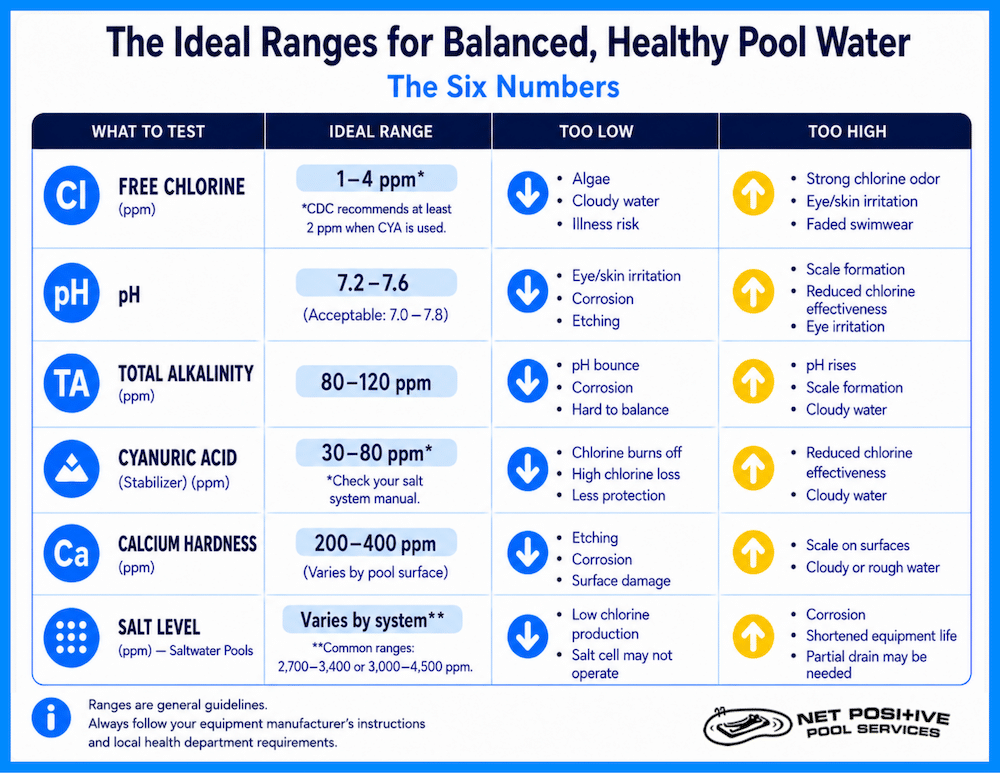
Many residential pools operate with free chlorine between 1 and 4 ppm. The CDC recommends at least 1 ppm in pools without cyanuric acid and at least 2 ppm when cyanuric acid or stabilized chlorine is used. Labels, local rules, and equipment instructions may call for a narrower range.
Low free chlorine in a saltwater pool may relate to the salt level, cell output, pump run time, water temperature, stabilizer level, heavy swimmer use, or a dirty or aging cell.
pH
The CDC lists 7.0 to 7.8 as an acceptable pH range for residential pools. As pH rises, chlorine becomes less effective at killing germs. High pH can also contribute to cloudy water and scale. Low pH can irritate swimmers and corrode equipment or pool surfaces.
When a test comes back high, muriatic acid or a dry acid product will bring pH levels back down. Handle either one carefully. Wear the protective equipment listed on the label, work somewhere ventilated, and never mix muriatic acid with chlorine or any other pool chemical.
Total Alkalinity
A common total alkalinity range is 80 to 120 ppm, though the target varies by sanitizer, pool surface, and cyanuric acid level. Low alkalinity allows pH to swing quickly. High alkalinity can make pH harder to lower and may add to scale formation.
Most alkalinity increasers use sodium bicarbonate, which raises the alkalinity level. Lowering alkalinity takes more care. Acid brings it down, but doing so without dropping pH too far usually means several measured treatments, so retest between doses.
Cyanuric Acid
Cyanuric acid, also called “pool stabilizer,” slows chlorine loss from sunlight. Outdoor chlorine pools typically range between 30 and 50 ppm, but salt chlorine generator manuals may recommend 20 to 80 ppm and 0 ppm for indoor pools. Too little can allow sunlight to use up chlorine quickly. Too much can slow chlorine activity and require a higher free chlorine level. Lowering excess cyanuric acid often requires partially draining and replacing water.
Calcium Hardness
A common calcium hardness target for plaster pools is 200 to 275 ppm. Vinyl and fiberglass pools may have different recommendations. Consider calcium hardness with pH, alkalinity, temperature, and total dissolved solids.
Low hardness can contribute to plaster etching when the overall water balance is corrosive. High hardness combined with high pH and alkalinity can leave scale on the salt cell, heater, tile, and waterline.
Salt Level
For saltwater pools, the salt target depends on the generator. Some systems operate around 2,700 to 3,400 ppm. Check the manual before adding salt because an excessive level may require partial draining and refilling.
Salt does not evaporate, but the concentration changes when water leaves through splashing, backwashing, leaks, or draining and is replaced. Heavy rainfall can also dilute the salt level.
Pool Water Testing Methods
The best testing method is one you can use correctly and consistently. Some pool owners use strips for quick checks and a liquid kit for more detailed testing. Professional testing can help confirm results or identify issues that a basic home kit does not measure.
Test Strips
Pool test strips are quick and inexpensive. They work well for routine checks of chlorine, pH, and total alkalinity. Some strips also measure calcium hardness, cyanuric acid, or salt.
Dip the strip according to the bottle instructions, wait for the listed amount of time, and compare each pad with the color chart. Do not assume every brand uses the same dipping or reading process.
Heat, moisture, age, and poor storage can affect the results. Keep the container tightly closed and dry. Replace the strips by the printed expiration date and read the results in natural daylight when possible.
Test strips may not provide the same level of detail as a good liquid kit. Use another method to confirm a reading that appears unusual or does not match the condition of the water.
Liquid Test Kits
Liquid test kits usually provide more detailed and repeatable results than test strips. Reagent drops are added to a measured water sample. You then match the resulting color with a standard or count the drops required for the sample to change color.
Drop-count titration is commonly used to measure total alkalinity and calcium hardness. Other liquid tests measure chlorine and pH through color comparison.
The sample volume and number of drops directly affect the result. Fill the chamber to the correct line, hold reagent bottles as directed, and follow the instructions for your kit. Replace reagents by their expiration dates because old products can produce inaccurate readings.
Digital Pool Testers
Digital testers provide a numeric reading instead of requiring you to compare colors. They can be useful for pool owners who have trouble distinguishing shades on a test strip or liquid test block.
A digital result is not automatically more accurate. Probes must be cleaned, stored, and calibrated according to the manufacturer’s directions. Old calibration solution or a probe that has dried out or become damaged can produce incorrect readings.
Some digital testers measure only pH or salt, while others measure several water conditions. Check what the device actually tests before relying on it as your only method.
Professional Water Testing
Professional water testing can confirm home results and measure factors that a basic test kit may skip. Depending on the equipment used, testing may include salt, metals, stabilizer, calcium hardness, or phosphate levels.
Bring a water sample to one of the Net Positive retail pool stores or book our water testing service once or twice during the season. We test with the Xpress Flex system by Taylor Technologies, which pairs imaging software with dedicated test strips to read free chlorine, total chlorine, pH, total alkalinity, hardness, cyanuric acid, salt, phosphate, copper, iron, and borate in a single pass. In-store testing is free, and you do not need to buy the machine to use it.
Home testing is still needed between professional checks. Water conditions can change after heavy rain, high temperatures, large swimmer loads, chemical treatments, or equipment problems.
How to Test Pool Water Step by Step
- Let the pool water circulate according to the pump schedule and equipment instructions.
- Collect the sample elbow-deep and away from return jets, skimmers, steps, and chemical feeders.
- Rinse the testing container with pool water before collecting the final sample.
- Test promptly because chlorine and pH can change when the sample sits in heat or sunlight.
- Follow the exact directions for the test strip, liquid kit, or digital tester.
- Record the date and results so you can spot gradual changes.
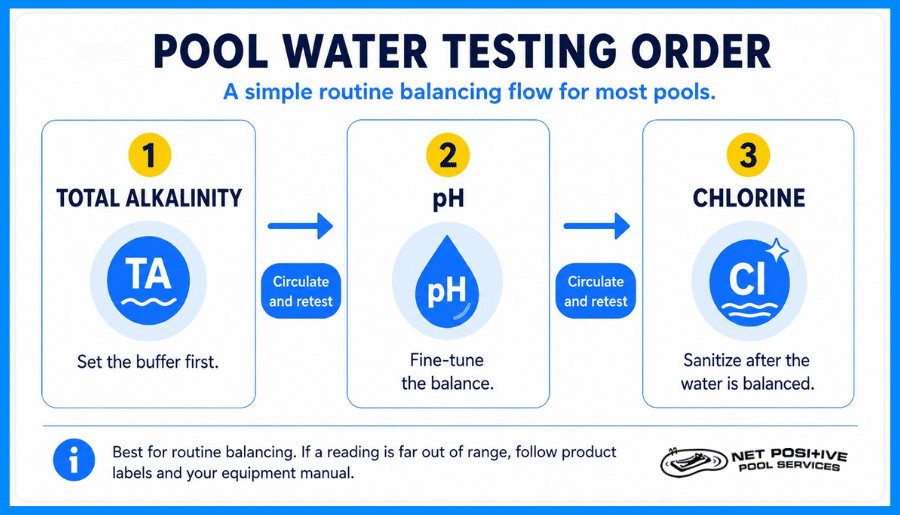
- Use the results and product directions to decide what to correct first. pH and alkalinity affect each other, so retest between changes.
- Add each chemical separately according to its label. Never combine pool chemicals in the same container.
- Let the water circulate for the time listed on the product, then retest.
How Often Should You Test?
The CDC advises testing chlorine and pH at least twice daily and more often during heavy use. Check total alkalinity regularly until the pool follows a predictable pattern. Cyanuric acid, calcium hardness, and salt can usually be checked less often, based on pool use, recent water changes, and equipment instructions.
Make sure to test after:
- Heavy rain
- Very hot weather
- A pool party or heavy swimmer use
- Backwashing
- A partial drain or refill
- Visible algae or cloudiness
- Adding a large amount of water
- Equipment or salt cell problems
Check hot tub water before use and follow the manufacturer’s sanitizer and pH schedule. Spa chemistry can change quickly because the water volume is smaller and the temperature is higher.
Net Positive Pool Services offers weekly maintenance plans that cover testing and routine adjustments for owners who prefer not to track the chemistry.
Common Testing Mistakes to Avoid
- Pulling a sample from the surface or directly in front of a return jet
- Using tap water to rinse the sample container
- Testing immediately after adding chemicals
- Using expired reagents or damp test strips
- Reading color results under tinted or poor lighting
- Using a digital tester without regular calibration
- Adding several chemicals before retesting
- Ignoring the equipment manual in favor of a general range
- Forgetting to test cyanuric acid and salt in a saltwater pool
Keep Your Pool Testing Simple
Check the right levels, use a method you can follow correctly, collect a representative sample, and keep a log. Regular testing protects swimmers, the pool surface, the salt cell, and other equipment.
When a reading comes back off and you are not sure what to do next, bring a sample to one of our three retail stores in Mooresville, Concord, or Huntersville. We are an authorized dealer for Jandy, Hayward, Pentair, Polaris, BioGuard, and Pool RX, and our team can match a product to whatever your test results show.
Net Positive Pool Services provides water testing, salt cell cleaning, equipment repair, pool maintenance, and more swimming pool solutions. Contact us for help keeping your pool water within the correct ranges.